Commitment to Accessibility
Ensuring our digital services are usable by everyone, regardless of ability.
Our Accessibility Promise
At Accounting Clarity, we believe that expert financial solutions should be accessible to all. We are dedicated to creating and maintaining a website that is inclusive and usable by everyone. Our commitment extends beyond providing excellent accounting services; it encompasses ensuring our online presence adheres to the highest standards of web accessibility. We strive to meet and exceed the Web Content Accessibility Guidelines (WCAG) 2.1 Level AA, providing a seamless and equitable experience for all our users, including those with visual, auditory, motor, or cognitive impairments.
We understand that accessibility is not a static achievement but an ongoing process. Our team is continuously working to improve the user experience across our website, employing a multi-faceted approach to identify and resolve accessibility barriers. This page details the measures we have implemented and our ongoing dedication to digital inclusivity.
Key Accessibility Features
We have implemented several features to make our website accessible:
- Keyboard Navigation: All interactive elements, including links, buttons, and form fields, are fully navigable using only a keyboard. Focus indicators are clearly visible, allowing users to easily track their position on the page. The tab order is logical and intuitive, following the visual flow of the content.
-
Screen Reader Compatibility:
We employ semantic HTML and ARIA (Accessible Rich Internet Applications) roles and attributes to provide assistive technologies like screen readers with meaningful information about the page structure and content. This includes descriptive alt text for all images, clear labels for form elements, and appropriate ARIA landmarks to help users navigate efficiently.
- Color Contrast: We ensure that sufficient color contrast ratios are maintained between text and its background. This adheres to WCAG 2.1 AA requirements, making content legible for users with low vision or color blindness. Our design palette has been carefully selected to provide clarity and readability.
- Resizable Text: Users can adjust text size through their browser settings without losing content or functionality. Our layout is designed to remain responsive and usable even when text is magnified.
- Consistent Navigation: The primary navigation menu is consistently placed across all pages, providing a predictable user experience. This helps users, especially those with cognitive disabilities or who are new to our site, to quickly find their way.
- Descriptive Links: Link text is descriptive and makes sense out of context, helping users understand the destination of a link before clicking it. We avoid generic link text such as "click here."
Technical Implementation and Standards
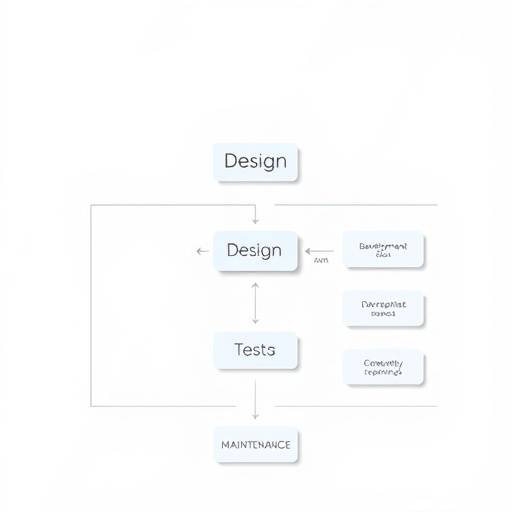
Our development practices are guided by the principles of universal design and accessibility best practices. We meticulously incorporate accessibility considerations into every stage of our website's lifecycle, from design and development to ongoing maintenance and content creation.
We utilize the following techniques:
- Semantic HTML5: We use appropriate HTML5 elements like
-
ARIA Roles and Attributes:
Where native HTML semantics are insufficient, we leverage ARIA roles (e.g.,
role="banner",role="navigation",role="main") and attributes (e.g.,aria-label,aria-describedby,aria-haspopup) to enhance the accessibility of dynamic content and complex UI components. - Focus Management: We carefully manage focus for dynamic content updates, ensuring that users, especially screen reader users, are aware of changes and can easily interact with newly presented content.
- Transcripts and Captions: For any multimedia content, we strive to provide accurate transcripts and captions to cater to users who are deaf or hard of hearing.
-
Forms Accessibility:
All form fields are programmatically associated with their labels using the
aria-labelledbyattribute. Error messages are clearly communicated and associated with the relevant fields. - WCAG 2.1 AA Compliance: Our development team is trained in WCAG 2.1 guidelines, and we conduct regular audits to ensure our compliance with the POUR principles: Perceivable, Operable, Understandable, and Robust.
Accessibility Testing
We conduct regular testing of our website using a combination of automated tools and manual testing methods. This includes:
- Automated Accessibility Scanners: Tools like Lighthouse, WAVE, and axe are used to identify common accessibility issues.
- Manual Keyboard Testing: Our team navigates the entire site using only a keyboard to ensure all interactive elements are reachable and operable.
- Screen Reader Testing: We test with popular screen readers (e.g., NVDA, JAWS, VoiceOver) to verify that content is read out correctly and that the user experience is intuitive.
- User Feedback: We actively encourage feedback from our users regarding any accessibility challenges they encounter.
"Accessibility is not a feature, it's a fundamental requirement. Just like in the physical world, our digital spaces must be designed to be welcoming and usable for everyone."
Ongoing Commitment
Accounting Clarity is committed to the continuous improvement of our website's accessibility. We recognize that the digital landscape is constantly evolving, and so are the needs of our users. We regularly review our accessibility practices, update our training, and incorporate feedback to ensure our website remains a valuable and accessible resource for all our clients and visitors. We are actively working to make our online platform as inclusive as possible, reflecting our core values of clarity, integrity, and service.
Accessibility Statement Review
This Accessibility Statement was last reviewed and updated on October 26, 2023. We are dedicated to ensuring this document accurately reflects our current accessibility efforts and commitments.
Get in Touch
If you encounter any accessibility barriers on our website or have suggestions for how we can improve, please do not hesitate to contact us. Your feedback is invaluable in helping us enhance the experience for all users.
You can reach us via email at accessibility@accountingclarity.com or call us at +1 865-407-2012 .
Accessibility Resources
For more information on web accessibility standards, please refer to the following resources: